beefy,
most orchids with 2 parents of different genera usually marry up the names of each genera like cattleya + epidendrum = an epicattleya or miltonia + brassia = miltassia.
breeders have pushed the limits of orchid breeding and now there are orchids with 3 and 4 parents ( through several generations of course) "ara" is a suffix that is added to the breeders name or name of someone close to the breeder. so aliceara, and degormoara, among many others have 3 or more parents.
to complicate things even further, there are other suffixes depending on the mix of parents. the degormoara you compared your bloom to has miltonia, brassia, and oncidium in it's parentage. yours probably has a different grex name (thats the 'winter wonderland') meaning that parents of the same genera but different grex were used in breeding. hold on to your hat 'cause i'm not done confusing you yet!
orchids are monocots while most garden plants are dicots, meaning that they have a "food" package included in the seed that will help germinate the seed. monocots have no food package, orchids have 100,000's of seeds in each bloom pod, and the seeds are like dust.
when the seed pod breaks open they are carried on the wind to come to rest in the crooks of tree branches and the like. once the seeds come to rest they rely on michorhizal fungi to convert detritus into sugars that the seed needs to germinate.
in the lab of a breeder the fungi is replaced with special concoctions of sugars and agar and under sterile conditions the seeds are "flasked" and hopefully coaxed into growing. the breeder ends up with thousands of plants but they all look a little different.
they then select a very few blooms that have all the traits that they were looking for in the initial cross, and basically destroy those plants and harvest the meristem. once they have the meristem cells they can make millions of identical clones. dawn briefly explained meristem cloning earlier in this thread, so i won't go into that in more detail unless you ask (i can prattle on about orchids for more pages than you want to read).
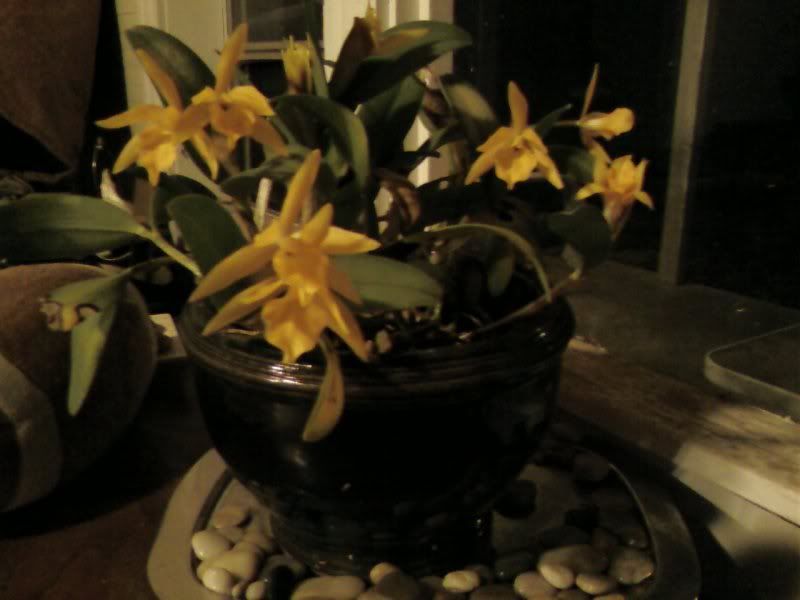
i have tried to put this little mini lecture in laymans terms as much as possible. if you have more specific questions fire away. best case scenario if i could see a picture of your bloom, i could pin it down a little closer.
phew, i'm wore out!
cheers
doc





 )
)