Sarah, that place is in New Jersey, not Houston, and they don't deliver that far. I did not see pine on their price list either though they did say they had pine. To me that looks like a place that sells wood for fine carpentry. They have some nice wood varieties and sizes you will not see in standard lumber yards or a big box store. A good carpenter could make works of art out of that wood, it's not like what you would use to frame a house.
I still suggest you go to an expert in Houston, someone that sells lumber in that area, and chat with them. See what they say about it. There may be someone local to you that sells those dimensions. In a place the size of Houston there should be.
You can't go changing the dimensions of the wood you use as that would affect how things fit together. There is a lot of careful work that goes into that cutting list. If they call for a 3x3 I'd assume they want a finished 2-1/2 x 2-1/2, that's the way it normally works. Can you add the dimensions on a side in those plans and determine that for sure? Add up the widths or lengths of a section and see if you get the correct overall dimension. I see a possible problem with that though in the bottom frame. They call for 6" long screws to put together two 3x3 pieces. Unless there is something in the plans to account for that you'll have a screw sticking out an inch if the finished dimensions are 2-1/2". That would not be good.
You said you purchased those plans, I suspect they were not inexpensive. With the not-readily-available sizes they call for you might still be better off looking for other plans, that wood might be expensive. If you price out what the materials for that coop would actually cost you may find it better to look for something else.
I think Red made a good point. Can you give us a link to those plans so we can see what the final product looks like and tell us how many chickens you plan to have? I don't know your experience with chickens, but many of us have chickens and understand what is required for them. A lot of prefabricated coops are designed to be pretty, not functional, and don't suit chickens at all. It's possible those plans are the same, pretty but not functional. They may have more nests than needed which doesn't hurt the functionality of it but is a pure waste of extra materials and labor to piece them together. Often the roosts are not positioned correctly or the coop is difficult to clean or access for maintenance. Quite often the coops are advertised to be able to hold two or three times as many chickens that they really can comfortably. This last one is truly common. You may already know enough to handle all this yourself but if you need help with this some of us can help.
In your climate you don't have to worry about cold at all, you will need a lot of ventilation though. For some circumstances I understand pretty is very important, either for yourself and your standards or to not upset your neighbors by putting up a "redneck" structure that will bring housing prices down in the neighborhood. Something else to consider are your carpentry skills and what tools you have to use to construct it. That appears to have a lot of precisely cut pieces that will require some pretty good fit-up. There is a lot that goes into choosing the right coop.



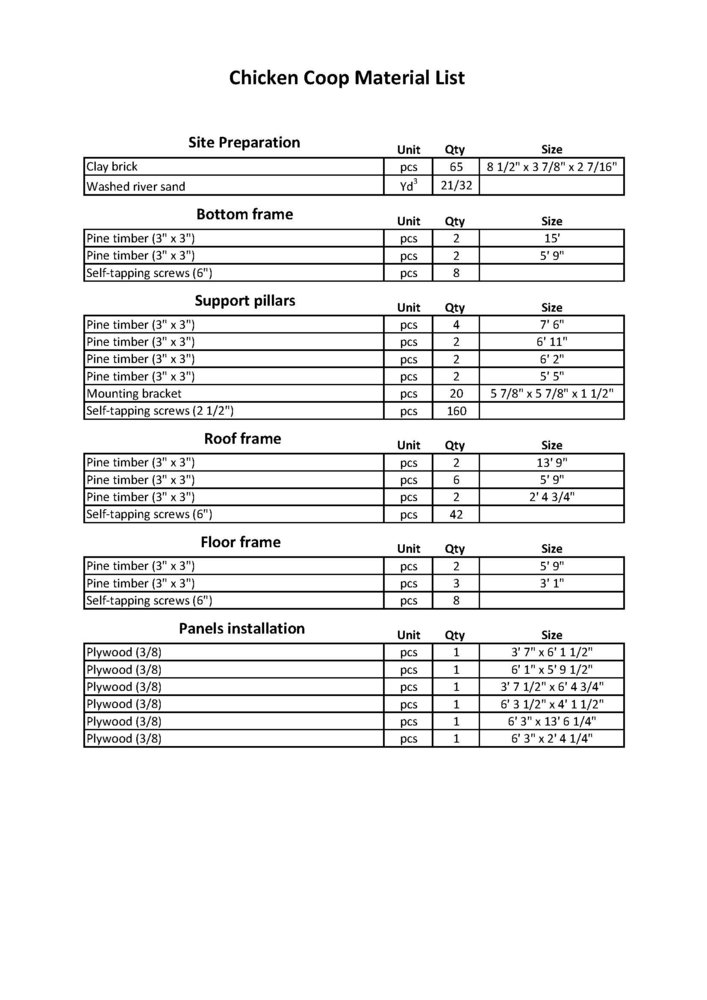
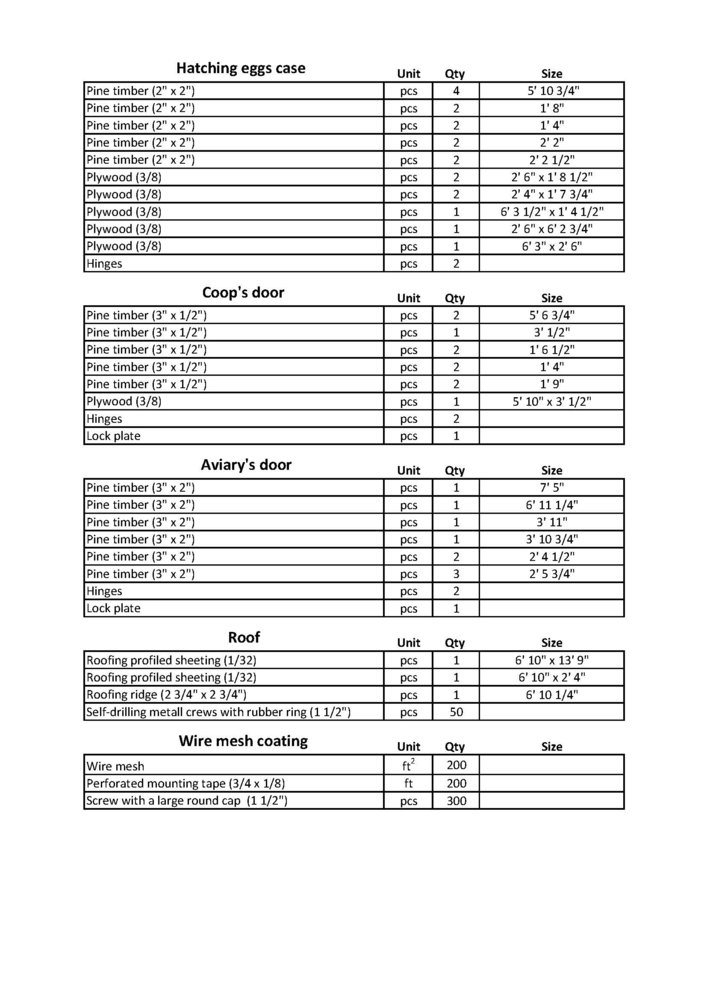

 . It's as though these items are available elsewhere and the materials list was simply changed from metric to inches and feet.


