Walled kitchen gardens

I had to reread that last question, Marshall
shocked.gif
!

Oh, you mean tenents . . . = tenets . . . = something that is written out and agreed upon by residents in a community of homes.

Not the person who pays rent to occupy a property! I had imagined . . . no . . .

Well yes! I'd imagine that walled gardens would violate some homeowner covenants! Sometimes they have ridiculous bans. Like, no clothes hanging on clotheslines . . . With nearly 40% of our total US energy going to heat, cool and light our buildings - you'd think that not using a clothes dryer a few days out of the year might be seen as a good thing!

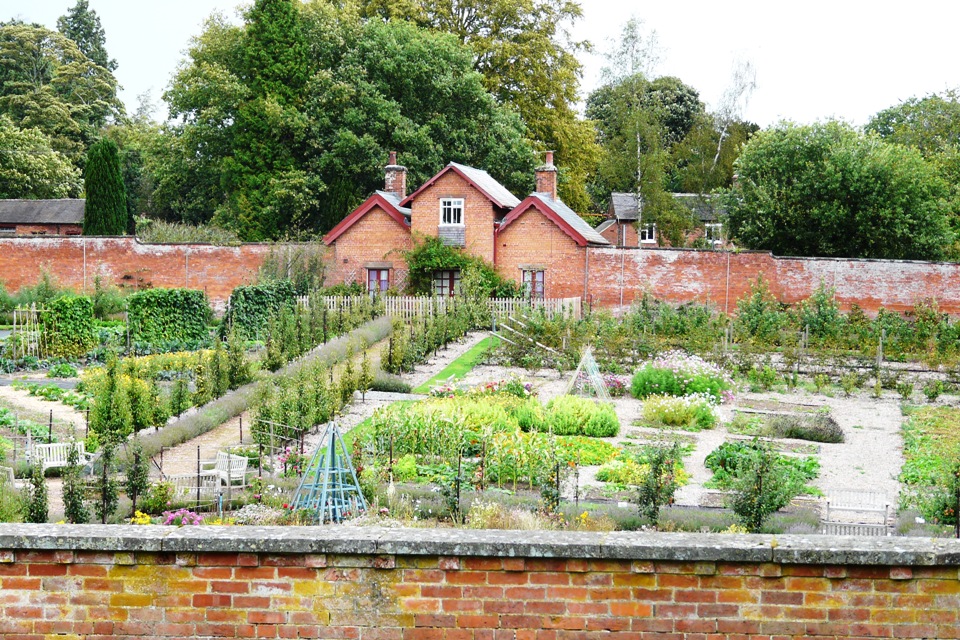
Probably, the walled gardens on some of the British estates represents an expression of past over-consumption of resources. Imagine how many fired bricks went into these garden walls:
Sugnall+Walled+Garden+zoomed+in.jpg


It might be interesting to note that the ag engineers tell us that wind protection is better afforded using a more open construction. In other words, a little of the wind passes thru the "wall" rather than just goes over the top and then, slams down at a somewhat shorter distance away. So, a wall of stacked stones in the countryside with some gaps between the stones, might protect a garden better than a solid brick wall.

Steve :rainbow-sun
 
No, he meant tenet.
As in, tenet- any opinion, principle, doctrine, dogma, etc., especially one held as true by members of a profession, group, or movement.
It was a joke, pertaining to another thread.
 
marshallsmyth said:
I want to see a photo of one of these walled kitchen gardens.
You can watch most of the BBC TV program The Victorian Kitchen Garden on youtube. There are 13 episodes total- an introduction and an episode for every month of the year. But so far nobody has put the entire episode for October, November and December online, but the rest are complete. DVDs of the program are available from British sources, but I cannot find anyone who is selling it in America. Europe has a different DVD format so I don't know if the disks will play on American DVD machines even if you bought them from the British.
 
digitS' said:
Well yes! I'd imagine that walled gardens would violate some homeowner covenants! Sometimes they have ridiculous bans. Like, no clothes hanging on clotheslines
Are you kidding? About a year so ago I saw a story online about a homeowner who was violating a city ordinance by having a vegetable garden in his front yard. Idiocy.

Probably, the walled gardens on some of the British estates represents an expression of past over-consumption of resources. Imagine how many fired bricks went into these garden walls:
Not really. Historically coal has always been abundant in Britain and the world isnt likely to run out of clay anytime soon so the walled garden is an example of extracting the greatest possible benefit from locally available materials. But greenhouses used in Britain were not very good from an environmental standpoint (not that the Victorians understood this at the time) because they were not designed to be solar greenhouses (glass walls tilted to maximize solar exposure and things like water and masonry walls used to store the energy that is collected). So Victorian Era greenhouses had to be heated by coal-fired boilers. By the 1960s the British could no longer afford to use fossil fuels to heat their greenhouses so all but a few greenhouses were demolished or went to ruin.

It might be interesting to note that the ag engineers tell us that wind protection is better afforded using a more open construction. In other words, a little of the wind passes thru the "wall" rather than just goes over the top and then, slams down at a somewhat shorter distance away. So, a wall of stacked stones in the countryside with some gaps between the stones, might protect a garden better than a solid brick wall.
Ive heard this- wind blows over the walls and then swirls around inside the garden. The Victorians may not have had the technological ability to learn how wind behaves, but they did know to plant tall trees (taller than the wall around the garden) outside the walled garden on the side from which the wind usually came. And dont forget that solid masonry walls make better heat storage devices for plants that need warm conditions. A solid brick or stone wall that gets full sun can be as much as 10 degrees Celsius warmer than the shaded wall on the opposite end of the garden.
 
The one at Westover is 5-6'brick walls with HUGE boxwood hedges around them.
I didn't know that they were walled for any reason other than to be fancy and pretty. But now that I think back - it was always seemed warmer in there than out in the fields.
 
Loved the pic of a walled garden Steve... It looks so organized and neat.... my garden never looks organized...
 
I am not sure of walled gardens in the very distant past...

But, here in the desert for many years gardens have been enclosed by walls to
keep out Javalina, rabbits, deer, ground squirrels, etc.

A couple of years ago a friend of mine got a walled garden as a gift from her husband.
This was a real labor of love. Her husband owns a brick company.
They specialize in walkways and retaining walls.

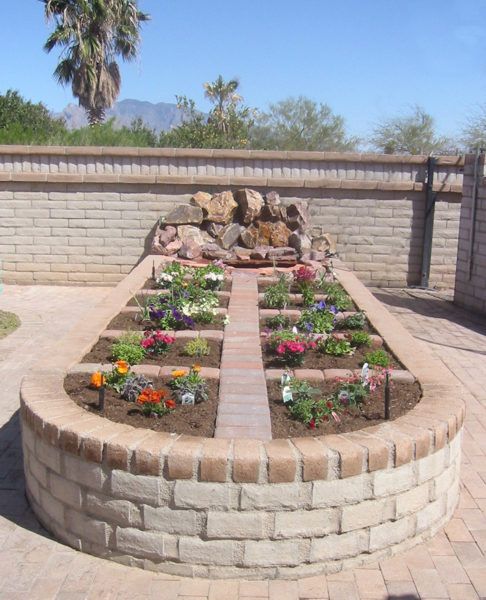
Here are a few photos from right after it was built.

Herbs and flowers, there is a waterfall at the far end of the bed.

HerbsandFlowersemail.jpg


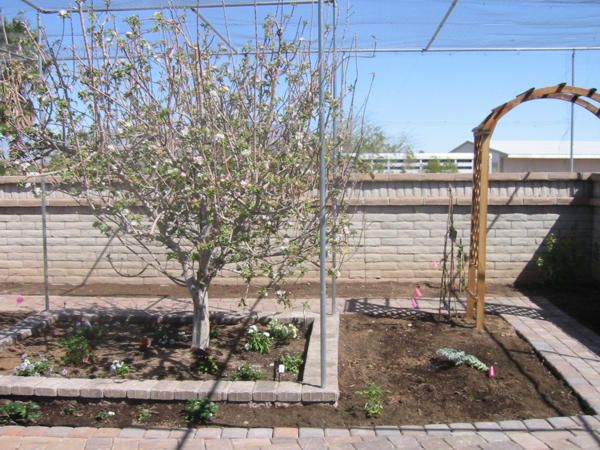
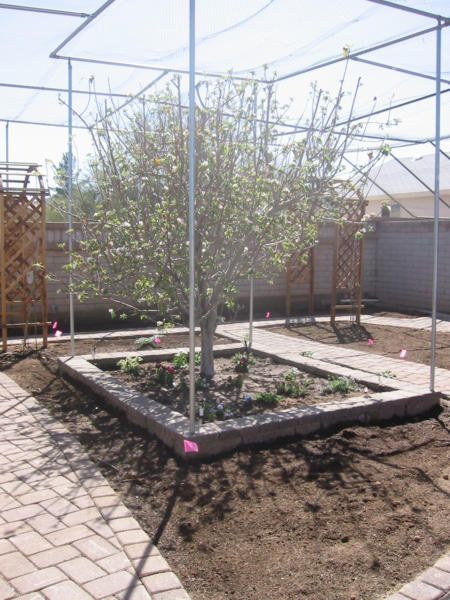
Apple tree in the center of the garden (Developed in Israel, produces fruit with very little cold weather.)
There are Grape Arbors in a few places over the brick path way. (you can only see one from this view.)


AppleTreeandGrapeTrellismemail.jpg


Along the brick walk ways are garden beds with a drip system installed.
She grows lots of vegetables and berries in the soil beds.

And over the entire garden are panels of fencing, that keep birds out of
the garden, but let through beneficial bugs.

AppleTreeemail.jpg
 
Rebettzin, are those panels made with netting? If so, does the netting cover the entire garden? Does all that brick make the garden hotter?

Mary
 

Latest posts

Back
Top