
so lucky
Garden Master
A little positive reinforcement, eh, Red? 


Follow along with the video below to see how to install our site as a web app on your home screen.
Note: This feature may not be available in some browsers.


As long as you leave enough room for nature to grow, it shouldn't matter what you introduce. The problem is that we keep cutting nature back.

Yes I am.I'm not sure I understand what you mean by this SeedO. Are you responding to @Lavender2 s comment about not wanting to introduce some of the invasives on Jasons list?

It is and some parts are hard to get past when he and other folks wax on and on about this or that, or there is singing or food munching, but it's worth it to persevere. It's also interesting to note that when he says, "And I use no fertilizer" that he means no commercial fertilizer....he uses horse composted horse manure and chicken manure liberally, it seems.
I won't be placing newspaper down like the other folks in the vid and, if you'll notice, neither did the Paul guy....he started this method on already plowed/bare soil. I'll be doing the same...tilling my sod under(my garden is replanted to grass and clover each fall to keep barren areas covered) and then placing the wood chips.
There is also a follow up vid that held more interest as it catches up with many years after the initial video to see how it's still working out.... it's worth watching as well as it shows what he has been able to plant in this garden and his unusual methods in doing so, and the results of all that....

I'm not sure I understand what you mean by this SeedO. Are you responding to @Lavender2 s comment about not wanting to introduce some of the invasives on Jasons list?
As long as you leave enough room for nature to grow, it shouldn't matter what you introduce. The problem is that we keep cutting nature back.


Oh yeah, I was going to respond to that.
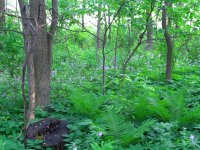
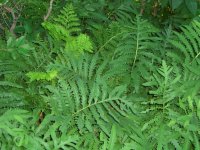
In my opinion it is very important to consider what plants you introduce to any land. I should clarify, the plants listed are not invasives but most are aggressive and non-native. I grow or have grown about 75% of that list, in a controlled garden. I know what will happen if pretty much any combination of the plants would be introduced into a native woodland. So, do I destroy the ecosystem and native plants that are already there, for my benefit?
View attachment 6424
View attachment 6425
I have blueberries, raspberries, cherry bush, rhubarb, several herbs, BES, Echinacea, etc. on the other side of my property...where we cleared invasive reed canary grass out. In my experience from growing aggressive plants, I'm not imagining how you would design those into what would be considered a stable ecosystem and a happy self regulating garden... and still get the greatest benefits from the foods you are growing.
No offense to anyone, just my experience and opinion.
I have blueberries, raspberries, cherry bush, rhubarb, several herbs, BES, Echinacea, etc. on the other side of my property...where we cleared invasive reed canary grass out. In my experience from growing aggressive plants, I'm not imagining how you would design those into what would be considered a stable ecosystem and a happy self regulating garden... and still get the greatest benefits from the foods you are growing.
No offense to anyone, just my experience and opinion.
Wouldn't the time it would take to complete this type of study, and then to take action by hand weeding the un-deisreable plants, only WEEDS would cover the entire area by out- competing the desired plants then we would have very few edible blueberries, raspberries, cherries, rhubarb, or herbs to eat ?And I suppose to answer this question we need to look at a couple things;
I you have more beneficial interactions than bad, my experience and research would tell me that I am likely to create a stable ecosystem. Please don't confuse stable ecosystems with static ecosystems.
- A plants shape, both above the ground and below
- which nutrients and chemicals are created by a plants leaf fall and roots respectively.
- Understanding a plants niche and specifically requirements for continued growth.
- Which species are specific plants habitats for, both above the ground and below.
- Does the plant allow for mychrorizal interface? Which type?
- What factors prevent growth?
- And how do all of the plants on the list meet the needs of each other and the species the live on, above, and below them.
- What are the beneficial interactions?
 At this point, wouldn't the cost of the edible items be so expensive that we couldn't afford to eat these crops as evidenced at the current much higher cost of these items that we have to now pay ? Many desireable edible plants are not always the best survivors of the fittest !
Given climate change are the current ecosystems worth saving if we can expect them to be unable to regulate themselves in the decades to come? (I have no opinion on this currently but it is a valid question.)
Native to when?


